
An experienced Occupational Therapist walks you through simple, powerful ideas to remove barriers and create a church where everyone feels welcomed, supported, and included. Learn how to evaluate your building and environment with fresh eyes—from stages, classrooms, doorways, and seating to lighting, noise, and sensory needs. Discover how small changes like adding sensory tools, improving signage, offering quiet spaces, or adding a variety of seating options can make a big difference. Explore inclusive strategies for classrooms, restrooms, stages, and even baptistries. This practical guide is packed with real-life tips, personal insights, and Biblical encouragement.
Accessible & Sensory-Friendly Setups: Part 1 of 5
Want to make your church more accessible and sensory-friendly? This video is packed with simple, practical tips to help your church remove barriers and welcome people with disabilities and sensory sensitivities. From parking lot to pulpit, make sure everyone is welcome and engaged in ministry!
Join an experienced Occupational Therapist, as you walk through:
• Evaluating your church with a diverse team
• Assess common accessibility barriers from a fresh perspective
• Sensory-friendly tips to make your church more comfortable for everyone
• Real-life examples from ministry settings like classrooms, stages, and even baptistries
Remember, an accessible and sensory-friendly church isn’t just about physical changes – it’s about creating a culture of inclusion where everyone feels valued and prepared for. Let’s work together to fill God’s house with all His children, just as Jesus called us to do.
Sensory Room Basics: Part 2 of 5
Does your church need a sensory room? Let’s find out! Discover how a sensory room can help kids and adults with significant sensory needs feel calm, safe, and ready to learn about Jesus. Did you know that a dysregulated sensory system can significantly impair learning? For people with sensory processing issues, meeting their sensory needs is crucial to help them focus on and understand the Bible. While many sensory needs can be addressed within the classroom, sometimes individuals may require a dedicated sensory space.
Join an experienced Occupational Therapist, as you walk through:
• How sensory regulation impacts behavior, focus, and spiritual growth
• Create a well-rounded sensory room that meets the needs of 6 different sensory profiles
• Choose your own easy, inexpensive sensory room tools to meet all 6 different sensory needs
• Tips for using routines, visuals, and communication tools to make your sensory room effective & safe
Remember, our goal is to help everyone access the Gospel message. A well-designed sensory room can be a powerful tool in making your church more inclusive & welcoming to all.
Create a Calm Room & Calm Corners: Part 3 of 5
Have you ever walked into a church and felt overwhelmed by the noise, lights, and crowds? You’re not alone. For many people with sensory sensitivities, attending church can be a challenging experience or even impossible. Sensory-friendly areas aren’t just nice-to-have – they are essential. A calming space allows people to regulate their nervous system. It can enhance participation and learning and even allow people to use their gifts in ministry more effectively.
Join an experienced Occupational Therapist, as you walk through:
• The importance and benefit of sensory-friendly spaces in churches
• Four key strategies for calming the nervous system
• Simple, budget-friendly ideas to implement these calming strategies
• How to set up a calm room or calm corner in your church
Remember, creating a calm space isn’t just about accommodating those with sensory issues – it’s about fostering an environment where everyone can connect with God more deeply. Are you ready to transform your church into a more welcoming space for all?
Accessible & Sensory-Friendly Playgrounds: Part 4 of 5
Let’s create accessible, sensory-friendly playgrounds that welcome kids of all abilities! Churches can lead the way! Creating inclusive play spaces isn’t just about following regulations, it’s about fostering a sense of community and belonging. Whether you’re planning a new playground or improving an existing one, this guide will inspire you to create a space where every child and their family feels welcome and included.
Join an experienced Occupational Therapist, as you walk through:
• Choosing safe, accessible surfaces (hint: no mulch!)
• Including ramps and ground-level entries
• Inclusive features like musical elements, supportive swings, and varied climbing levels
• Create joyful spaces for all with the power of Universal Design
• Inspiring ideas for churches to build and host inclusive community events
This is about more than play—it’s about belonging. Let’s show families affected by disability that they are wanted, welcomed, and loved.
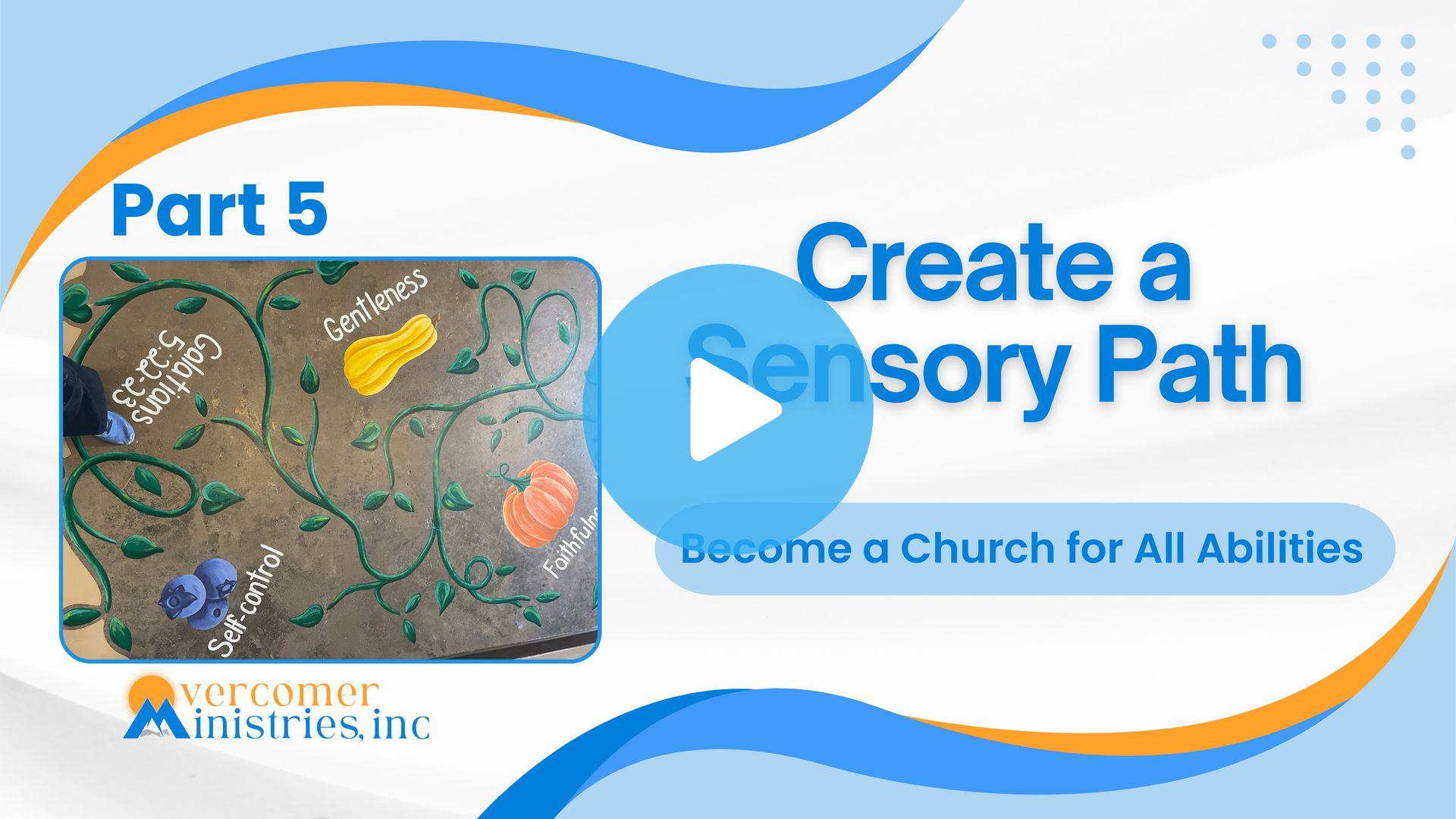
Create a Sensory Path: Part 5 of 5
Sensory paths are a powerful tool to help kids regulate their nervous systems, ease transitions, improve behavior, and learn through movement. They’re also a great way to incorporate Biblical truths in an engaging, multisensory way! Sensory paths aren’t just eye-catching – they are backed by research and evidence to improve learning, ease transitions, and promote sensory regulation. They are perfect for classrooms, hallways, entrances, sidewalks, and playgrounds. Ready to create your own sensory path? Let’s have some fun!
Join an experienced Occupational Therapist, as you walk through:
• The four main goals of sensory paths and how they can enhance your church environment
• Tips for movement-based sensory input (vestibular + proprioceptive)
• Fun ways to integrate Scripture like the Fruit of the Spirit, Books of the Bible, Armor of God or Memory Verses
• Creative materials: non-skid mats, chalk, craft foam, flashcards, and more
• How to make your sensory path effective and spiritually enriching